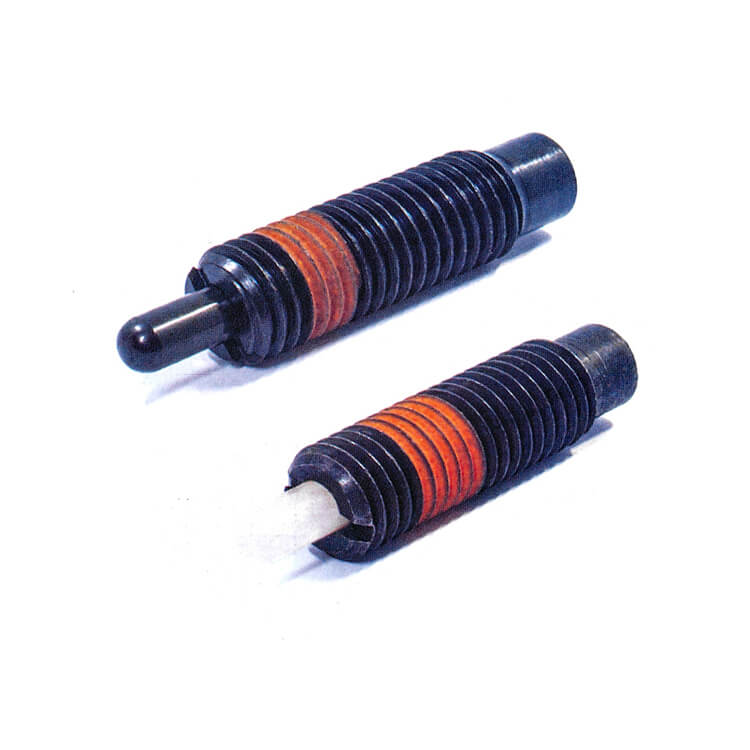
Spring plungers are small but essential mechanical components that help hold parts in place or provide precise positioning in machinery and equipment. You might not notice them, but they work quietly in everything from factory machines to everyday devices. A spring plunger is a positioning device that uses spring force to apply pressure against a surface, keeping parts aligned or locked in specific positions.
These components solve common problems like preventing unwanted movement, creating detents for adjustable settings, or maintaining consistent pressure between moving parts. They come in different styles and sizes to match your specific needs. Understanding how spring plungers work and which type fits your application can save you time and prevent equipment failures.
Learning about spring plungers will help you choose the right component for your project. You’ll discover what makes them different from similar parts and why they matter in manufacturing, assembly, and product design.
Key Takeaways
- Spring plungers use spring force to position and hold parts in place across many applications
- Different types and materials are available to match your specific load requirements and environment
- Selecting the right spring plunger involves considering factors like thread size, spring force, and material compatibility
What Is a Spring Plunger?
A spring plunger is a mechanical device that uses spring force to apply pressure against a surface or into a hole. These compact tools serve as indexing pins, detents, or positioning components in machinery and equipment.
Spring Plunger Definition
A spring plunger is a self-contained fastening device that combines a threaded body, internal spring, and plunger nose into one unit. You can install it into threaded holes where it provides controlled, repeatable force against mating parts.
The device works as both a locating pin and a pressure applicator. You’ll find spring plungers used to hold parts in specific positions, prevent unwanted movement, or create detent positions in mechanical assemblies.
Manufacturers design these components to handle repeated cycling without losing spring tension. The threaded body allows you to adjust how far the plunger extends from its housing, giving you control over the applied force.
Basic Components and Construction
Every spring plunger contains three main parts: the body, the spring, and the plunger pin. The body is a threaded cylinder that screws into your workpiece or assembly. It houses the internal components and provides the mounting interface.
Inside the body, a compression spring sits between the base and the plunger pin. This spring supplies the force that pushes the pin outward. The spring’s rate determines how much pressure the plunger applies.
The plunger pin extends from the body and makes contact with your workpiece. Different nose styles are available:
- Ball nose: Provides point contact and allows slight angular misalignment
- Flat nose: Offers stable surface contact for maximum holding force
- Delrin nose: Prevents scratching or marring on finished surfaces
- Cone nose: Centers into holes or detents with precision
The body typically includes a hex socket in the end. This socket lets you adjust the plunger’s extension depth using a standard hex key.
How Spring Plungers Work
When you install a spring plunger, the compression spring pushes the plunger pin outward against whatever surface or feature it contacts. The spring maintains constant pressure even when the pin moves in and out slightly.
You control the force by adjusting how far you thread the plunger into its hole. Threading it deeper compresses the spring more, increasing the force. Threading it out reduces the compression and lowers the force.
The plunger pin can move against the spring when you apply external force. This lets parts move past the plunger during assembly or adjustment while still maintaining pressure. Once the external force is removed, the spring returns the pin to its extended position.
Types of Spring Plungers
Spring plungers come in several distinct designs, each suited for different positioning and holding tasks. The main variations include ball-nose models for gentle contact, locking versions for secure positioning, retractable types for temporary engagement, and standard designs for general applications.
Ball-Nose Spring Plungers
Ball-nose spring plungers feature a rounded ball at the tip instead of a flat surface. This design reduces wear on the contact surface and allows the plunger to seat into detents or grooves smoothly.
The ball end distributes force over a smaller area, which helps with precise positioning. You’ll find these useful when you need to locate parts repeatedly in the same spot. The rounded nose also lets the plunger roll slightly when pressed, reducing friction.
These plungers work well for indexing applications where you rotate parts to specific positions. The ball can pop in and out of positioning holes without catching or sticking. They’re available in different ball sizes to match your detent dimensions.
Locking Spring Plungers
Locking spring plungers include a mechanism that holds the plunger in either the extended or retracted position. You control the position manually by pulling, pushing, or twisting the plunger nose.
This type eliminates the constant spring pressure found in standard models. When locked in the retracted position, the plunger stays completely out of the way. When locked extended, it maintains firm contact without relying on spring force alone.
You’ll use locking plungers when you need temporary or semi-permanent positioning. They’re common in fixtures and jigs where you want to quickly engage or disengage holding points. The locking action typically uses a detent, thread, or collar mechanism that you activate by hand.
Retractable Spring Plungers
Retractable spring plungers allow you to manually pull back or push in the plunger against spring tension. Unlike locking types, these return to their normal extended position automatically when you release them.
The retractable feature gives you temporary clearance when loading or unloading parts. You compress the plunger, position your workpiece, then let the spring push it back into contact. This makes them ideal for quick-change applications.
These plungers often include a knob or extended nose that you can grip easily. The spring strength varies based on your holding force requirements. You’ll find them in machine guards, doors, and adjustable stops where you need frequent access.
Standard Spring Plungers
Standard spring plungers are the most basic and widely used type. They consist of a threaded body, internal spring, and nose piece that extends outward under constant spring pressure.
The nose typically has a flat or slightly radiused end. You thread them into place, and they apply steady pressure against whatever surface they contact. The spring keeps the nose extended until something pushes it back.
You can adjust the amount of force by selecting different spring strengths, usually marked as light, medium, or heavy. Standard plungers handle general positioning, holding, and leveling tasks. They’re cost-effective and available in many thread sizes and materials to match your specific needs.
Key Features and Benefits
Spring plungers offer precise force control through adjustable tension settings, resist environmental damage with specialized coatings, and provide flexible mounting options for different applications.
Adjustability and Load Range
You can adjust most spring plungers to match your specific force requirements. The adjustment mechanism typically involves turning the end cap or body to compress or release the internal spring. This lets you fine-tune the holding force without replacing the entire unit.
Standard spring plungers come in light, medium, and heavy load ranges. Light-duty models provide forces from 2 to 8 ounces. Medium-duty versions offer 1 to 5 pounds of force. Heavy-duty plungers can deliver up to 20 pounds or more.
The adjustable design saves you money because one plunger can handle multiple force requirements. You don’t need to stock different models for each application. Some models feature lock nuts that prevent the adjustment from changing due to vibration or repeated use.
Corrosion Resistance Options
Spring plungers are available in multiple materials to resist corrosion in different environments. Stainless steel models work well in wet conditions, food processing areas, and marine applications. They resist rust and maintain their function in humid settings.
Black oxide coated steel plungers offer basic corrosion protection for indoor use. Zinc-plated versions provide better resistance for moderate environments. For harsh chemical exposure, you can choose plungers made from brass or with specialized coatings.
The ball or nose contact point also comes in different materials. Stainless steel balls resist wear and corrosion. Nylon tips prevent surface damage on soft materials and reduce noise during operation.
Installation and Removal Methods
You install spring plungers by threading them into pre-drilled and tapped holes. The threaded body screws directly into your workpiece or fixture. Standard thread sizes include #10-32, 1/4-28, and M6 for metric applications.
Common Installation Steps:
- Drill the mounting hole to the correct diameter
- Tap threads to match the plunger size
- Apply thread-locking compound if needed
- Thread the plunger into place
- Adjust the tension to your required force
You can remove spring plungers by turning them counterclockwise with a hex key or wrench. The tool engages either a socket in the end cap or flats on the body. Some models include knurled ends for hand adjustment in accessible locations.
Common Applications
Spring plungers serve critical functions in mechanical systems where you need controlled pressure, precise positioning, or quick adjustments. These components appear in manufacturing equipment, assembly fixtures, and automated machinery across multiple industries.
Positioning and Indexing
You’ll find spring plungers in positioning applications where parts need to align accurately and stay in place. The ball or nose of the plunger fits into detents, holes, or grooves on mating components to create defined stopping points.
In indexing systems, spring plungers hold workpieces or rotating parts at specific intervals. This allows you to rotate equipment like turntables, dials, or machine tool heads to exact positions. The spring pressure keeps components locked until you apply enough force to move to the next position.
Common indexing uses include:
- Rotary tables on milling machines
- Dial indicators and measurement tools
- Adjustable stops on production equipment
- Door and panel positioning mechanisms
The plunger’s spring force determines how firmly it holds position. You can select different spring strengths based on whether you need light touch positioning or secure locking that resists vibration and movement.
Assembly and Fixture Design
Spring plungers play a key role in assembly fixtures where you need to hold parts temporarily during welding, gluing, or fastening operations. The constant pressure keeps components aligned without requiring clamps or additional hardware.
In fixture design, you can use spring plungers as locating pins that push against part surfaces. This ensures consistent placement while allowing easy loading and unloading. The spring action compensates for small variations in part dimensions.
Many fixtures use spring plungers as:
- Work stops that position parts against reference surfaces
- Ejector pins that push finished parts out of fixtures
- Hold-down devices for securing flat materials
- Quick-release mechanisms for tool changes
Machinery and Automation Uses
Automated systems rely on spring plungers for reliable, maintenance-free operation. You’ll see them in conveyor systems where they act as gates, stops, or part detection sensors. The plunger extends into the path of moving items to control flow or trigger position switches.
Robotic end effectors and grippers use spring plungers to apply consistent pressure on delicate parts. The spring compliance prevents damage while maintaining contact. In pneumatic and hydraulic systems, spring plungers serve as backup positioning devices when power fails.
Manufacturing equipment uses spring plungers for tool retention and quick changes. They lock cutting tools, drill bits, or dies in place with a simple push-and-click action. This reduces changeover time compared to threaded fasteners or complex locking mechanisms.
Material Choices and Customization Options
Spring plungers come in different materials to match your specific needs, from standard steel to specialized plastics. The material you choose affects durability, corrosion resistance, and cost.
Steel vs. Stainless Steel Plungers
Steel spring plungers are the most common choice for general applications. They offer good strength at a lower price point. These plungers work well in dry environments where rust isn’t a concern.
Stainless steel plungers cost more but provide better corrosion resistance. You’ll find them in food processing, marine, and medical equipment. Grade 303 and 316 stainless steel are the most popular options.
The main difference between grades is corrosion resistance. Grade 316 handles saltwater and chemicals better than 303. Grade 303 machines more easily and costs less.
Steel plungers typically handle heavier loads. Stainless steel versions may have slightly lower load capacities due to material properties.
Plastic and Composite Options
Plastic spring plungers use materials like nylon, acetal, or PEEK. These materials don’t corrode and won’t scratch delicate surfaces. You’ll see them in electronics, optics, and anywhere metal contact could cause damage.
Plastic plungers weigh less than metal versions. They also work well in applications that need electrical insulation. The trade-off is lower strength and temperature limits.
Some manufacturers offer composite plungers that combine plastic bodies with metal springs. This design gives you corrosion resistance where you need it while keeping the spring strong.
Custom Orders and Special Requirements
Many suppliers offer custom spring plungers for unique applications. You can specify:
- Thread size and length – Non-standard dimensions for special housings
- Spring force – Different pressures from light to heavy duty
- Nose style – Flat, radiused, or cup points for specific contact needs
- Materials – Special alloys or coatings for extreme environments
Custom orders usually require minimum quantities. Lead times range from 2-8 weeks depending on complexity. Some manufacturers will modify standard plungers with special coatings like zinc plating or black oxide for added protection.
Selecting the Right Spring Plunger
Choosing the correct spring plunger requires evaluating load requirements, movement distance, and the conditions where the plunger will operate.
Criteria for Specification
You need to identify several key specifications before selecting a spring plunger. Thread size and type form the foundation of your selection since the plunger must fit your existing mounting holes. Common thread types include metric (M3, M4, M6) and imperial (4-40, 6-32, 10-32) sizes.
The plunger tip material and style affect how it contacts your workpiece. You can choose from plastic, steel, or stainless steel tips. Ball tips work well for smooth contact, while flat tips provide stable positioning on surfaces.
Spring force determines how firmly the plunger holds your part in place. Manufacturers rate this force in pounds or newtons. You should match the spring force to your application’s needs without applying excessive pressure that could damage components.
Load Capacity and Travel Considerations
Load capacity tells you how much force the spring plunger can handle without failing. Light-duty plungers handle up to 2 pounds of force, while heavy-duty models support 10 pounds or more.
Travel distance measures how far the plunger tip can move inward when pressed. Standard travel ranges from 0.04 to 0.20 inches. You need enough travel to accommodate your part’s movement or positioning tolerance. Too little travel means the plunger won’t absorb variations in your workpiece. Too much travel reduces the spring’s effectiveness.
MISUMI and other manufacturers provide detailed load and travel specifications in their catalogs. You should verify that your selected plunger’s maximum load exceeds your application’s peak force by at least 20%.
Environmental Factors
Your operating environment significantly impacts which spring plunger materials you should select. Stainless steel plungers resist corrosion in wet or chemical-exposed areas. Standard steel plungers cost less but require dry conditions.
Temperature extremes affect spring performance and material integrity. Most standard plungers operate reliably between -20°F and 250°F. High-temperature applications need special materials that maintain spring force in heat.
Vibration and shock loads require plungers with higher spring forces to maintain contact. You should also consider whether the plunger needs to lock in place or move freely during operation.
Industry Standards, Compliance, and Online Purchasing
Spring plungers must meet specific industry standards to ensure quality and safety in applications. When purchasing online, you need to understand supplier requirements and product certifications.
Relevant Standards and Certifications
Most spring plungers follow ISO 9001 quality management standards for manufacturing consistency. This certification ensures the supplier maintains proper production controls and quality checks.
Industry-specific standards also apply depending on your application. RoHS compliance restricts hazardous substances in electrical and electronic equipment. REACH regulations control chemical substances in European markets.
Some spring plungers carry material certifications like stainless steel grades 303 or 316. These specifications matter for corrosion resistance and strength requirements. You should verify certifications match your project needs before ordering.
Medical and aerospace applications require additional certifications. FDA approval may be necessary for medical devices. AS9100 certification indicates aerospace quality standards.
Ordering from Suppliers
Online suppliers like MISUMI offer digital catalogs with detailed specifications and CAD models. You can filter products by size, material, and load capacity to find the right spring plunger.
Most supplier websites require you to review their privacy policy and terms and conditions during checkout. These documents explain how your data is used and your rights as a customer. Cookie settings let you control tracking preferences on the site.
Many suppliers use cookies to save your cart and preferences. You can adjust cookie settings in your browser or through the supplier’s cookie management tool.
Lead times vary between suppliers and products. Standard spring plungers typically ship within 1-3 business days. Custom configurations may take several weeks.
Overview of Manufacturer Offerings
Major manufacturers produce spring plungers in multiple series for different applications. Ball-type plungers work well for indexing and positioning. Pin-type designs suit alignment tasks.
Materials include stainless steel, alloy steel, and plastic bodies. Spring forces range from light-duty (a few ounces) to heavy-duty (several pounds). Thread sizes follow standard metric and imperial dimensions.
MISUMI and similar suppliers stock thousands of spring plunger variants. You can select end types, body styles, and plunger materials. Some manufacturers offer custom modifications for special requirements.
Pricing depends on material, quantity, and specifications. Bulk orders typically reduce per-unit costs.
Frequently Asked Questions
Spring plungers are used in many industries to hold, position, and locate parts with adjustable pressure. Understanding proper installation, material options, and force requirements helps you select and use the right spring plunger for your needs.
What are the most common applications of spring plungers?
You’ll find spring plungers in machine tools, jigs, and fixtures where they hold workpieces in place during manufacturing. They position parts on assembly lines and keep panels or doors in specific positions. These devices work well for indexing applications where you need to locate components at precise intervals.
Manufacturing equipment uses spring plungers to secure removable panels and access doors. You can use them in robotics and automation systems to position parts temporarily. They also appear in exercise equipment, furniture, and electronic enclosures where adjustable tension is needed.
How do you properly install a spring plunger?
You need to drill and tap a hole to match the spring plunger’s thread size and type. The hole depth must be deep enough to accommodate the plunger’s body length. Clean the threads in the hole and on the plunger before installation.
Thread the spring plunger into the hole by hand first to avoid cross-threading. Use a hex key or screwdriver to tighten it to the recommended torque specification. Make sure the plunger tip contacts the mating surface at the correct angle.
Test the spring force after installation by pressing the plunger in and releasing it. Adjust the depth or select a different force rating if needed.
What materials are spring plungers typically made from?
Steel is the most common material for spring plungers because it provides strength and durability at a low cost. Stainless steel versions resist corrosion in wet or chemical environments. The balls or pins are often hardened steel to resist wear from repeated contact.
You can find plastic spring plungers for light-duty applications where metal might damage delicate surfaces. Some models feature brass or aluminum bodies for specific weight or conductivity requirements. The internal springs are typically made from spring steel or stainless steel.
How do you determine the correct size and force for a spring plunger?
Measure the space available for installation to determine the maximum body diameter and length you can use. Check the thread size and pitch that matches your existing holes or your tapping capabilities. The plunger’s stroke length must be sufficient for your application’s movement range.
Calculate the holding force needed to keep your part in position without making it too difficult to release. Consider the weight of the part and any external forces that might try to move it. Spring plungers come in light, medium, and heavy force ratings.
Test your application with the selected force rating to ensure it holds properly. You may need to try different force levels to find the right balance between holding strength and ease of release.
What is the difference between a ball spring plunger and a pin spring plunger?
A ball spring plunger has a spherical tip that contacts the mating surface at a single point. This design allows for some misalignment between the plunger and the surface. The ball rotates as it contacts the surface, which reduces wear.
A pin spring plunger features a cylindrical tip that can fit into holes or detents. You use this type when you need precise positioning or indexing. The pin provides more accurate location than a ball but requires better alignment during installation.
Ball plungers work better for general positioning and holding applications. Pin plungers are your choice when you need parts to lock into specific locations with higher accuracy.
How can you adjust the force exerted by a spring plunger?
Some spring plungers have adjustable end force through a threaded nose or locking mechanism. You turn the nose piece to compress or decompress the internal spring. This changes the pressure the plunger applies to the mating surface.
Most standard spring plungers have fixed force ratings that you cannot adjust. You must replace the entire unit with a different force rating if the current one doesn’t work. Keep different force ratings in stock if your application requires frequent adjustments.
Threading the plunger deeper into its mounting hole can slightly increase the force in some designs. However, this method has limited range and may not provide enough adjustment for your needs.